There’s a recurring pattern in how technology projects fail. It’s not the code. It’s not the cloud infrastructure. It’s not the AI models.
It’s the gap between what technology can do and what people actually need.
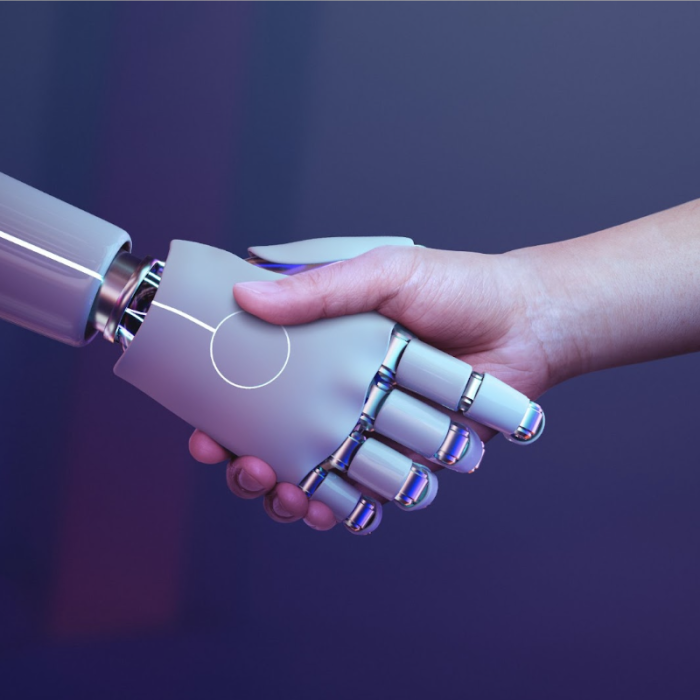
At 20fifty, we’ve built our entire approach around a simple equation: Human ingenuity + Intelligent technology = World-class solutions. It sounds straightforward.
Getting the balance right is where the real work happens.
Technology alone is not the answer
An organization invests in the latest AI capabilities, deploys top-notch serverless architecture, implements best-in-class data lakes…and still struggles to deliver meaningful business value.
Why? They started with the technology instead of starting with the problem.
When we worked with Pick n Pay, one of Southern Africa’s largest retailers to build a serverless enterprise data lake and vendor-facing data monetization platform, the breakthrough wasn’t the AWS services we used. It was understanding what success actually meant for their business. What did their vendors need? How would their teams actually use this data? What decisions would this enable that weren’t possible before?
The technology is the means to an end, not the end itself.
Listening is the most generous gift
“First, solve the problem. Then, write the code.” – John Johnson.
Before we write a single line of code, we listen. Not the polite head-nodding kind of listening while waiting for your turn to talk. The kind where we set aside judgment and assumptions, and lean in to truly hear what someone is saying.
This is human ingenuity in its purest form: the ability to understand context, to read between the lines, and to recognize when what someone is asking for isn’t actually what they need.
When we built a full-stack solution for one of Africa’s financial services institutions, the technical complexity was significant. The real challenge was understanding how customers actually interact with financial services, what makes them trust a digital interface, and where friction points would derail the experience.
No AI model could have told us that. It took human insight, empathy, and creative problem-solving.
AI amplifies human insight
Once you understand the human context, intelligent technology becomes incredibly powerful.
Our Voice of Customer solution for AWS demonstrates this beautifully. Organizations collect thousands of customer interactions daily.The human challenge is that no team has the capacity to manually process that volume and extract meaningful patterns.
Here’s what we learned: AI doesn’t replace human judgment. AI amplifies it.
The technology ingests disparate data sources, processes and enriches them using Amazon Comprehend and Bedrock, then surfaces patterns and insights through intelligent dashboards. The questions we ask of that data, the way we structure insights for executives, and the decisions about which metrics matter? That’s all human ingenuity.
AI technologies help our team and our clients to identify that customer sentiment around delivery is trending in a particular way. Human judgment determines whether that’s a logistics issue, a communications problem, or an expectations mismatch, and then decides what to do about it.
When ideas collide in a productive way
We believe in creative abrasion. This is a productive friction that happens when different perspectives collide. When engineers push back on business requirements. When designers challenge technical constraints. When customers force us to reconsider assumptions we didn’t know we were making.
This is where human ingenuity thrives. Not in isolated genius, but in the collaborative mess of figuring things out together.
Technology enables this by making iteration faster. Serverless architectures let us test hypotheses without massive infrastructure investment. AI models let us simulate scenarios and explore possibilities quickly. Cloud-native development means we can build, test, learn, and pivot in tight cycles.
The creativity is distinctly human.
Thinking in time horizons
We’re not thinking 100 years out in some abstract sci-fi future. We’re thinking about 2030, 2040, 2050. These are timeframes where today’s decisions have real, tangible effects.
When we architect solutions, we ask: How does this scale as your business grows? What happens when customer expectations shift? How do we build flexibility into the foundation so you can adapt without rebuilding from scratch?
This is human ingenuity applied to technology strategy. AI can optimize for the problem in front of us today. Humans have to think about the problems that don’t exist yet.
When a major African corporation approached us about digital transformation, we didn’t lead with AWS services or serverless architecture. We started by understanding their customers’ relationship with banking, their regulatory environment, their internal capabilities, and their competitive landscape.
Then, we mapped intelligent technology to those human insights. Which technology would give them the agility they needed? Where could AI reduce friction in the customer experience? How could we design systems that their teams could actually maintain and evolve?
The result? Solutions that worked not just technically, but contextually. Technology that fits the organization, not the other way around.
If you’re wrestling with how to translate technology capabilities into business value, we should talk. Not about what’s technically possible, but about what’s meaningfully achievable. Not about technology for its own sake, but about how the right tools, applied with genuine human insight, can transform how your organization operates.
The best solutions aren’t born from choosing between human ingenuity and intelligent technology. They’re born from understanding that both are essential.